
Colostrum: Tiny Drops, Powerful Protection
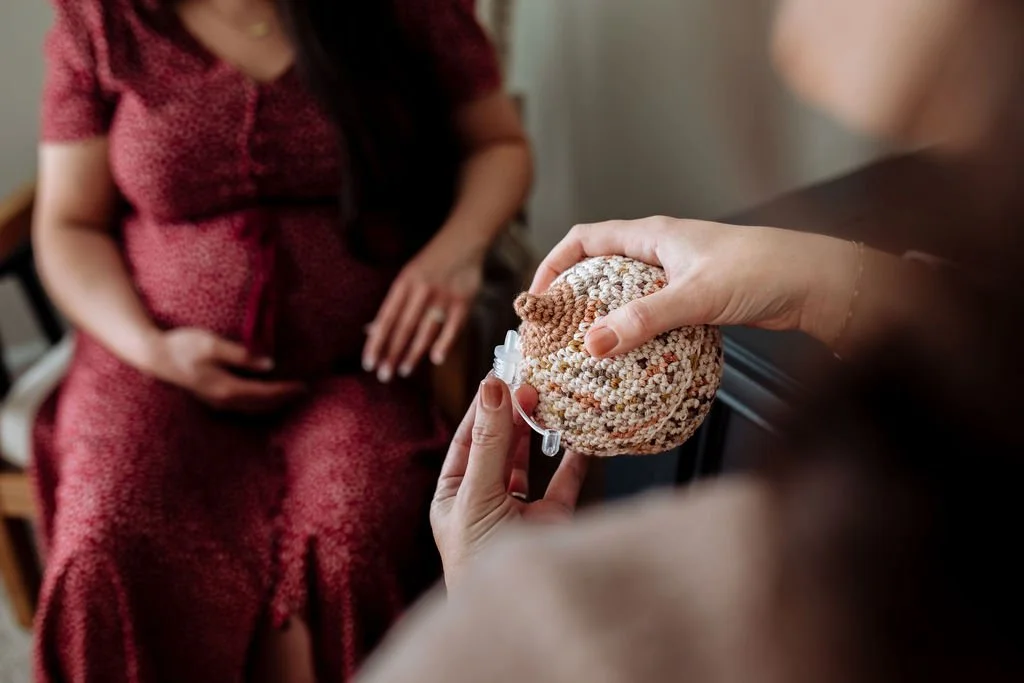
In those first hours after birth, something incredible is happening.
Your body is making colostrum — often called “liquid gold.”
Not because of the color (though yes, it can be beautifully golden)… but because of what it does.
And here’s something many mothers don’t hear enough:
Those tiny drops are not small. They are powerful.
“But It’s Only a Few Drops…”
If you’ve ever looked at colostrum and thought, “That can’t possibly be enough,” you’re not alone.
In the early days, colostrum comes in small amounts — teaspoons, not ounces.
But your baby’s stomach is also very small (about the size of a cherry at birth), and colostrum is perfectly matched to that.
It’s not trying to be “a lot.”
It’s trying to be exactly right.
A “Did You Know?” Moment
Colostrum is packed with immune factors — in much higher concentrations than mature milk.
We’re talking about things like antibodies, protective proteins, and even living immune cells that help your baby transition from life inside the womb to the outside world.
It’s less about volume… and more about purpose.
What New Research Is Showing (And It’s Pretty Amazing)
Recent research led by Dr. Valerie Verhasselt is helping us understand just how impactful those early feeds can be.
In a large study of over 600 infants, researchers found that babies who received only colostrum in the first few days of life had significantly lower rates of food allergies later on.
In fact:
Babies who received formula alongside colostrum in those early days were 5 times more likely to develop peanut allergy
And 11 times more likely to develop multiple food allergies
Even more interesting?
Frequent colostrum feeds — around 9 or more in a day — were associated with no cases of peanut allergy in that study.
So… What Does This Actually Mean?
Not that you need to be perfect.
Not that one bottle changes everything.
But it does highlight something really important:
Those early feeds matter — not because of how much, but because of what colostrum is designed to do.
Colostrum isn’t just nutrition.
It’s information.
It’s helping your baby’s immune system learn:
What is safe
What is not
How to respond to the world
Another “Wow” Moment
Colostrum doesn’t just work in the moment.
Studies suggest it may help shape your baby’s immune system in ways that last months — or even longer.
Think of it as a kind of early foundation — quiet, unseen, but deeply important.
A Gentle, Important Pause
If you’re reading this and thinking:
“I didn’t have that experience.”
“We needed to supplement.”
“It didn’t go how I hoped.”
Please hear this:
This is information — not judgment.
There are many reasons supplementation is needed, and many ways to support your baby’s health moving forward.
Feeding your baby is not a single moment.
It’s a relationship that unfolds over time.
What Matters Most in Those Early Days
If you are in those first few days, or preparing for them, here’s what can help:
Offering the breast frequently
Following your baby’s cues
Protecting those early feeds as much as possible
Getting support if things feel uncertain
Not perfectly. Just gently, consistently, and with support.
A Final Thought, Mama
It’s easy to underestimate something that comes in drops.
But colostrum was never meant to impress you with volume.
It was designed to quietly do important work — protecting, guiding, and supporting your baby in ways we’re still learning to fully understand.
And your body already knows how to make it.
With warmth, always —
Cailen, Wholehearted Lactation
Empowering mamas, nurturing babies
